
Iron at pH 8: which chelate survives the soil you actually farm
Most of the soil this region irrigates is calcareous and sits above pH 7.5, and most of the iron sold into it is chelated with EDTA, which stops holding iron at about pH 6.5. This review sets out the chemistry that decides the outcome, the trial evidence for each chelate, and the one number on an EDDHA label that determines whether the product works — which is not the total iron figure.
What this review covers.
- Kind
- Review of published work, not an Infert trial
- Covers
- Fe-EDTA, Fe-DTPA and Fe-EDDHA on soils above pH 7
- Evidence
- Soil-chemistry equilibria and one 2025 replicated study
- Does not cover
- Foliar iron rates, or any product comparison
- Compiled
- July 2026
The problem is arithmetic before it is agronomy
Iron is the fourth most abundant element in the crust and one of the most common deficiencies in the field, which sounds like a contradiction until you look at the equilibrium. Lindsay and Schwab express the solubility of soil iron as Fe(OH)₃(soil) + 3H⁺ ⇌ Fe³⁺ + 3H₂O, with a log K° of 2.70. Because three protons appear in that reaction, free Fe³⁺ in solution falls by a factor of about a thousand for every unit the pH rises: nine orders of magnitude between pH 5 and pH 8. There is plenty of iron in a calcareous soil. There is almost none of it in solution, and a root can only take up what is in solution.
What a chelate promises, and when the promise expires
A chelating agent wraps the iron so it stays in solution instead of precipitating as hydroxide. Each agent holds to a different pH, and above that pH it hands the iron over — usually to calcium, which a calcareous soil supplies in quantity. The published ceilings are consistent across sources: Fe-EDTA holds to roughly pH 6.5, Fe-DTPA to roughly 7.0–7.5, Fe-EDDHA to about 9. These are not brand differences. They are the stability constants of the molecules, and no formulation changes them.
What the trial evidence shows
Hershkowitz and colleagues grew Calibrachoa and soybean in media held in three pH bands — 6.0 to 6.5, 7.0 to 7.2, and 7.6 to 7.8 — and fertigated each with 1 mg/L of iron as EDTA, DTPA or EDDHA, scoring chlorosis and dry mass. Below pH 6.5 all three prevented chlorosis: the cheapest one was the correct one. Above pH 7.2 only Fe-EDDHA was still effective, with Fe-DTPA intermediate. The same paper puts Fe-EDDHA at about four times, and Fe-DTPA at about twice, the cost of Fe-EDTA. So the extra money is only worth spending above pH 6.5 — and above pH 7.2 the cheaper products are not a saving at all. They are a nil return.
The number on an EDDHA label that matters
EDDHA is not one molecule. It is manufactured as a mixture of isomers, and only the ortho-ortho form holds iron in solution at high pH; the ortho-para and para-para fractions do not. A bag marked 6% Fe may carry anywhere from about 3.6% to 4.8% as o,o-EDDHA, so two products with identical headline iron can differ by a third in the fraction still working at pH 8. Reputable suppliers state the o,o figure on the specification. Where a specification does not state it, the honest reading is that the number is not being guaranteed.
What this means for a programme written here
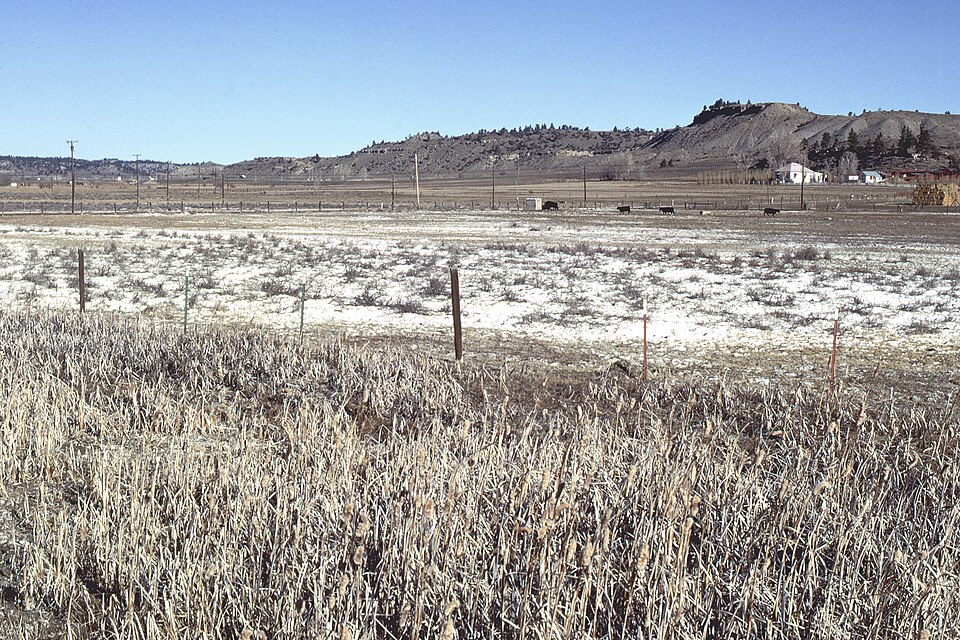
Jordanian agricultural soils are largely calcareous and alkaline, with pH commonly above 8 and free carbonate high — one Jordan Valley study reported 66% CaCO₃ before treatment. On that ground the decision rule is short. Measure soil pH. Above 7.2, do not buy EDTA-chelated iron for soil or fertigation at all: it will hand its iron to calcium before a root sees it. Between 6.5 and 7.2, DTPA is defensible. Above 7.2, EDDHA, bought on its o,o figure. Foliar iron stays useful for correcting a crop that is already chlorotic, because it bypasses the soil entirely — but it treats the leaves on the plant today and does not fix next month.
What we do with this
It changes what we are prepared to sell into a given soil, and what we disclose. When iron is quoted from us, ask for the chelating agent and — for EDDHA — the guaranteed ortho-ortho percentage, and expect both on the certificate of analysis. Where a customer sends a soil pH above 7.2 with an order for EDTA-chelated iron, our agronomy desk will say so before the order ships rather than after the season.
The pH each chelate holds iron to
| Chelating agent | Holds iron to about | Where that leaves it here |
|---|---|---|
| Fe-EDTA | pH 6.5 | Below the pH of nearly every soil in the region |
| Fe-DTPA | pH 7.0 – 7.5 | Marginal; workable at the lower end of our range |
| Fe-EDDHA (o,o) | pH 9 | The only one with headroom above pH 8 |
Stability limits as reported across the horticultural and soil-chemistry literature; see Hershkowitz et al. (2025) and the sources below.
Relative cost, from the same paper: DTPA about twice EDTA, EDDHA about four times.
Chelate effectiveness by media pH — Calibrachoa, 1 mg/L Fe
| Media pH band | Fe-EDTA | Fe-DTPA | Fe-EDDHA |
|---|---|---|---|
| 6.0 – 6.5 | Prevented chlorosis | Prevented chlorosis | Prevented chlorosis |
| 7.0 – 7.2 | Failing | Intermediate | Prevented chlorosis |
| 7.6 – 7.8 | Not effective | Not effective | Prevented chlorosis |
Hershkowitz et al. (2025), HortScience 60(3) — Calibrachoa and soybean, three media pH bands, scored on chlorosis rating and dry mass.
Key takeaways.
- Measure soil or media pH before choosing an iron source. It is the whole decision.
- Above pH 7.2, EDTA-chelated iron applied to soil is money spent for no iron.
- Buy EDDHA on its guaranteed ortho-ortho percentage, not on its total iron.
- Foliar iron corrects the leaves that exist today; it does not change the soil.
References & further reading.
Lindsay, W.L. & Schwab, A.P. (1982). The chemistry of iron in soils and its availability to plants. Journal of Plant Nutrition 5(4–7), 821–840.
Lindsay & Schwab 1982 ↗Hershkowitz, J.A. et al. (2025). Fertigation with Fe-EDTA, Fe-DTPA, and Fe-EDDHA chelates to prevent iron chlorosis of sensitive species in high-pH soilless media. HortScience 60(3).
Hershkowitz et al. 2025 ↗Van Iperen International. How to choose an iron chelate — on the ortho-ortho fraction of EDDHA, and why it rather than total iron determines performance at high pH.
On the o,o fraction ↗Ministry of Water and Irrigation (Jordan). Effect of adding dilute sulphuric acid on calcareous soil — reports carbonate content of Jordan Valley soil before and after treatment.
Jordanian soils ↗